
Metal Nanoparticles
Though nanotechnology feels like a frontier of the future, its origins trace back centuries. The Lycurgus Cup (4th century AD), a Roman artifact made of glass, changes color depending on the direction of light—green in reflected light and red in transmitted light. In medieval Europe, cathedral stained glass windows displayed vivid reds, yellows, and purples because artisans unknowingly incorporated gold and silver nanoparticles during the glassmaking process. These brilliant colors were not just artistic—they were the result of light interacting with metal particles at the nanoscale, revealing a surprisingly early application of nanotechnology long before the science behind it was understood.Today, those same nanoparticle properties are harnessed with scientific precision in plasmonic biosensors, anti-counterfeiting inks, smart coatings, and next-generation display technologies, continuing a legacy of nanoscale brilliance that now fuels real-world innovation.
At Higgsmond, we supply precision-engineered metal nanoparticles designed to meet the exacting standards of global industries, research institutions, and innovation-driven enterprises. As an India-based nanomaterials trading company with global reach, we connect cutting-edge material science with scalable, application-ready solutions.
Our extensive portfolio of metallic nanoparticles is available in both standard and customized specifications, offering high purity, uniform particle size, and reliable dispersion for commercial and R&D applications across multiple sectors.
What Makes Metal Nanoparticles Unique?
- They shine, literally – thanks to plasmonic resonance, metal NPs can be tuned to specific colors and light responses.
- They’re fast conductors – ideal for applications in nano-electronics and flexible tech.
- They interact with light and heat – enabling photothermal therapies and solar enhancements.
- They’re powerful at the nano-scale – particularly in antibacterial, catalytic, and biomedical roles.
Metal Nanoparticle Product Range
- Silver Nanoparticles (AgNPs) - Antimicrobial, conductive ink, coatings
- Gold Nanoparticles (AuNPs) - Diagnostics, medical imaging, biosensing
- Copper Nanoparticles (CuNPs) - Catalysis, lubricants, electronic devices
- Platinum Nanoparticles (PtNPs) - Catalysts, fuel cells, sensors
- Palladium Nanoparticles (PdNPs) - Hydrogen storage, catalysis, electronics
- Nickel Nanoparticles (NiNPs) - Magnetic materials, catalysts, Superalloys, energy storage
- Iron Nanoparticles (FeNPs) - Magnetic applications, contrast agents
- Aluminum Nanoparticles (AlNPs) - Propellants, energy storage, coatings
- Zinc Nanoparticles (ZnNPs) - Antibacterial agents, UV-blocking materials, cosmetics
- Titanium Nanoparticles (TiNPs) - Structural reinforcement, pigments, catalysis
Specifications
- High Purity (≥99.9%)
- Controlled Particle Sizes (10 nm – 100 nm)
- Surface Coating Options (Citrate, PVP, PEG, etc.)
- Dispersions in Water, Ethanol, or Custom Solvents
- Structure (Morphology, Crystalline Structure, Surface Area, etc.)
Blogs

The Business of Atoms: Commercial Future of Metal Nanoparticles
Metal nanoparticles have become key industrial assets, fueling global sectors from healthcare to electronics. This blog explores their commercial rise, ...
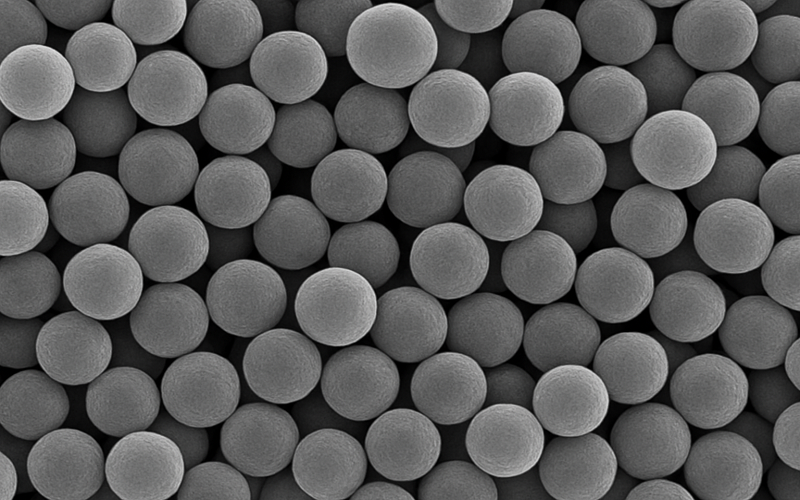
The Hidden Superpowers of Metal Nanoparticles: Why Size Redefines Function
Metals aren’t what they used to be at least not at the nanoscale. This blog explores how metal nanoparticles gain surprising new powers in light, magnetism, ...