HITEPOZZO® – UFFA Ultrafine Fly Ash for Geopolymer Systems
High-Reactivity Ultrafine Fly Ash for Advanced Geopolymer Binders & Concrete
Engineered aluminosilicate precursor for low-carbon, high-strength next-generation geopolymer systems
What is HITEPOZZO® – UFFA?
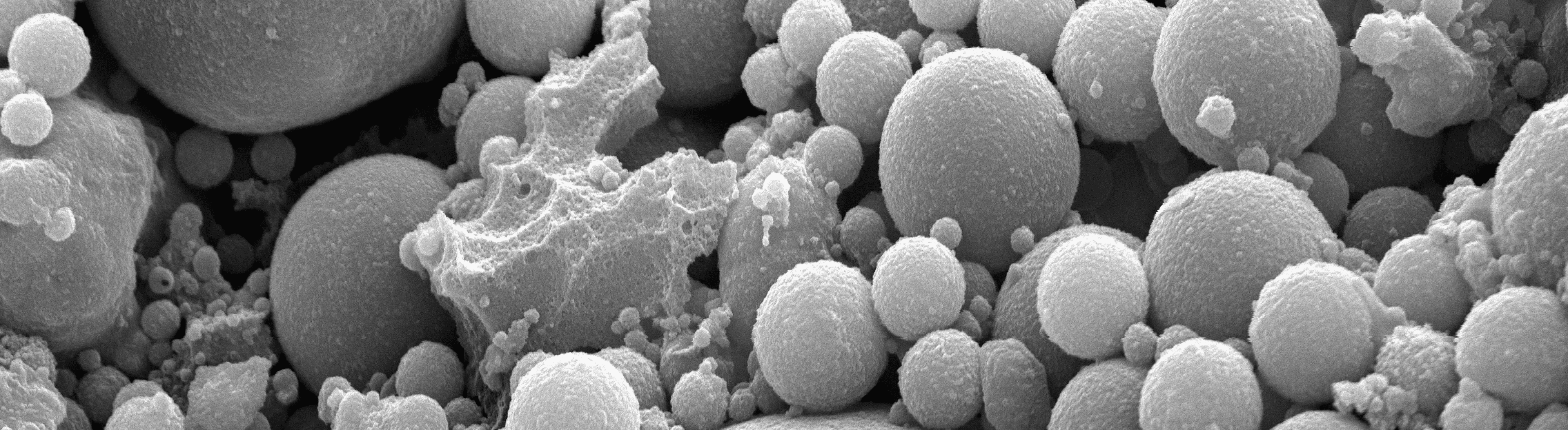
ITEPOZZO® – UFFA is a high-performance ultrafine fly ash developed specifically for geopolymer and alkali-activated binder systems. With its optimized particle size distribution, high amorphous silica content, and enhanced reactivity, it enables efficient geopolymerization and superior mechanical performance.
It is a preferred raw material for cement-free, sustainable construction solutions across global markets.
Higgsmond is an advanced materials company specializing in engineered ultrafine and nano-scale material solutions. A sister concern of Hitech Fly Ash India Private Limited, Higgsmond serves as the material science, application engineering and global market development arm of the group.
Hitech Fly Ash India Private Limited is a 100% Export Oriented Unit (EOU) and one of India's leading classified fly ash manufacturers and exporters, with 20+ years of experience and an annual processing capacity of 750,000 MT.
Combining Hitech Fly Ash India's large-scale manufacturing and export capabilities with Higgsmond's expertise in material science and particle engineering, the HITEPOZZO® Ultrafine Fly Ash Series has been developed as a range of engineered ultrafine fly ash solutions for diverse industries.
Geopolymer vs Alkali-Activated Binders– Why It Matters
Geopolymer systems offer superior performance in high-temperature, chemically aggressive, and highly controlled environments, whereas alkali-activated systems provide greater flexibility, scalability, and practicality for mainstream construction applications.
Why HITEPOZZO® Outperforms Conventional Fly Ash (engineered for Geopolymer Efficiency)
Comparing to conventional fly ash, ITEPOZZO® – UFFA is and offers
- High Reactive SiO₂ + Al₂O₃ Content
- Ultrafine Particle Size (High Surface Area)
- Low LOI (Loss on Ignition)
- High Glassy Phase Content
- Improved Packing Density
Performance Advantages (Delivering Measurable Results)
- High Early Strength Development
- Superior Long-Term Durability
- Excellent Chemical Resistance (Acid, Sulfate, Chloride)
- Up to 80% CO₂ Reduction vs OPC Systems
- Low Shrinkage & Crack Resistance
- Enhanced Thermal Stability
Geopolymer Applications (Designed for Global Geopolymer Markets)
Fly Ash Based Geopolymer Binders
- Cement-free geopolymer / alkali-activated binders
- Precursor for low-CO₂ construction materials
- Ready-mix geopolymer binder systems
- Low-carbon cement alternatives
Geopolymer Concrete
- Structural & non-structural concrete
- Precast elements (blocks, panels, pavers)
- Marine & sulfate-resistant concrete
- Fire & heat-resistant systems
- Ultra high-density concrete
- Infrastructure-grade low-carbon solutions
Advanced Geopolymer Products
- Defense infrastructure materials
- Refractory & thermal-resistant products
- Quick-setting mortars & grouts
- 3D printing geopolymer materials
Export & Supply Capability (Reliable Global Supply Chain)
Bulk supply capability for large-scale projects.
Consistent, high-quality production with strict batch-to-batch uniformity and controlled fineness.
Custom product engineering technical support with a customer- and project-centric approach.
Custom packaging options (small bags, jumbo bags, or bulk tanker).
Custom shipping options through bulk vessel or container.
End-to-end global logistics support, including export documentation and shipping coordination.
Technical support for mix design optimization.
Reliable global supply chain with two decades of expertise.
Build Next-Generation Geopolymer Solutions
Partner with us for high-performance ultrafine fly ash engineered for global geopolymer applications
Useful Links
- Ultrafine Fly Ash (UFFA) vs Conventional Fly Ash
- Ultrafine Fly Ash (UFFA) Vs Silica Fume (Micro Silica)
- Ultrafine Fly Ash (UFFA) Vs Metakaolin
- Ultrafine Fly Ash (UFFA) vs Microfine Slag (GGBFS)
- Ordinary Portland Cement (OPC) Vs Advanced Cementitious System (ACS)
- Alkali-Activated vs Geopolymer Concrete