Comprehensive Guide to Global Bulk Nanomaterial Manufacturing Equipment: Systems, Pros & Cons, Energy & Price Comparison
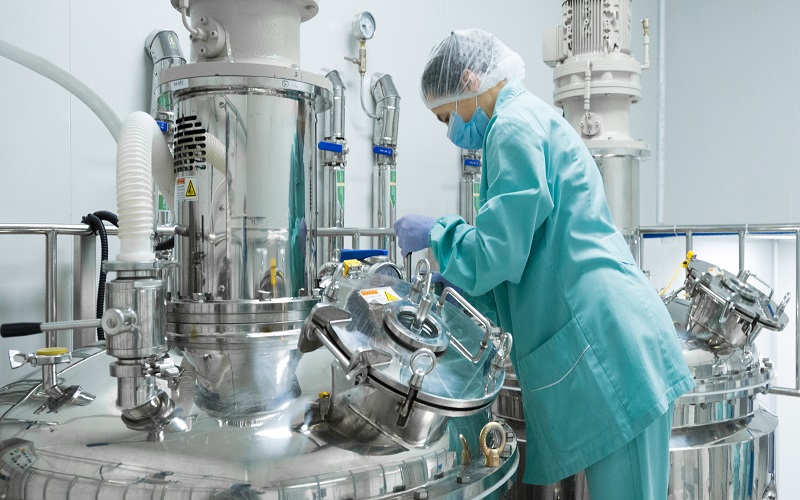
The global nanomaterials industry is growing at a CAGR of 13–15%, in contrast to lab-scale or thin-film fabrication—requires robust, scalable, and cost-efficient equipment and systems tailored to specific materials and market needs.
This blog delivers a complete overview of nanomaterial manufacturing systems used globally, highlighting Types of equipment, Pros and cons, Energy consumption and Price comparison.
- Ball Milling Systems (Top-Down Approach)
Types: Planetary ball mills, attritor mills, vibratory mills
Applications: Metal oxides (TiO₂, ZnO, Fe₃O₄), silica, graphite nanoparticles
Pros:
- Low capital cost
- Easy to scale
- No chemical precursors required
Cons:
- Particle size and shape variability
- Risk of contamination from milling media
- Limited to brittle and hard materials
- Sol-Gel Systems (Wet-Chemical Synthesis)
Types: Batch reactors, spray-gel reactors, automated gelation chambers
Applications: Silica, alumina, titania, hybrid polymers, aerogels
Pros:
- High chemical homogeneity
- Tailored porosity and nanostructures
- Low processing temperature (~100–400°C)
Cons:
- Slow production cycles
- Requires solvent recovery and drying systems
- Hydrothermal and Solvothermal Reactors
Types: Batch autoclaves, continuous-flow hydrothermal systems
Applications: Crystalline nanoparticles (ZnO, Fe₃O₄, CuO, graphene oxide)
Pros:
- Produces highly crystalline nanoparticles
- Low agglomeration
- Compatible with green synthesis
Cons:
- High-pressure operation
- Limited scale per batch
- Chemical Vapor Deposition (CVD)
Types: Thermal CVD, Plasma Enhanced CVD (PECVD), Low-Pressure CVD (LPCVD)
Applications: CNTs, graphene, SiO₂, TiO₂, thin films
Pros:
- Ultra-high purity and control
- Layered growth and thin-film capability
- Ideal for electronics, sensors, energy storage
Cons:
- Expensive infrastructure
- Energy-intensive
- Toxic precursors often required
- Spray Pyrolysis Systems
Types: Flame spray pyrolysis, ultrasonic spray pyrolysis, solution combustion
Applications: Metal oxides, battery cathodes (LiFePO₄, LiCoO₂), catalysts
Pros:
- Continuous process
- High surface area products
- Tunable particle size
Cons:
- Hazardous aerosol and waste handling
- Higher precursor cost
- Maintenance-intensive
- Flame Spray Synthesis (FSS)
Types: Open flame burners, enclosed flame reactors
Applications: Nano-TiO₂, ZnO, SiO₂, CeO₂
Pros:
- High production rate
- Simple design, continuous synthesis
- No need for solvents
Cons:
- Limited control over morphology
- High energy and safety protocols needed
- Plasma Arc Discharge Systems
Types: DC arc plasma, RF plasma reactors
Applications: Carbon nanomaterials (CNTs, fullerenes), metal nanoparticles
Pros:
- High purity CNTs and carbon materials
- Minimal solvent or chemical waste
Cons:
- High initial energy input
- Small-scale yields per cycle
- Ultrasonic Cavitation Systems
Types: Ultrasonic probes, flow-through cavitation systems
Applications: Nanocellulose, graphene exfoliation, emulsions, nanopigments
Pros:
- Green synthesis technique
- Ideal for dispersion and exfoliation
- Low-temperature process
Cons:
- Scale-up challenges
- Lower yields per pass
- Atomic Layer Deposition (ALD) / Molecular Beam Epitaxy (MBE)
Types: Thermal ALD, plasma ALD, ultra-high vacuum MBE systems
Applications: Semiconductor nanofilms, sensors, supercapacitors
Pros:
- Atomic-scale precision
- Conformal coating on complex substrates
- Critical for nanoelectronics
Cons:
- Not suitable for bulk powder synthesis
- Capital and maintenance heavy
- High-Pressure Homogenization & Nanoemulsion Systems
Types: High-shear mixers, nano-jet homogenizers, membrane emulsifiers
Applications: Pharma nanocarriers, cosmetic nanoemulsions, food-grade nanomaterials
Pros:
- Particle size below 100 nm
- Suitable for water-soluble materials
- Low thermal stress
Cons:
- Application-specific
- Limited material versatility
Energy Consumption Comparison Table
|
Equipment/System |
Energy (kWh/kg) |
Efficiency Class |
|
Ball Milling |
0.5–2.5 |
High |
|
Sol-Gel |
1–4 |
Medium |
|
Hydrothermal |
3–7 |
Medium |
|
Spray Pyrolysis |
6–10 |
Medium-High |
|
Flame Spray Synthesis |
7–14 |
Medium-Low |
|
CVD |
8–12 |
Low |
|
Plasma Arc |
10–15 |
Low |
|
ALD / MBE |
5–15 |
Ultra-Precision / High Cost |
|
Ultrasonic Cavitation |
1–3 |
Green / Lab-to-Mid Scale |
|
High-Pressure Homogenizer |
0.8–3 |
High |
Price Comparison Table (Indicative for Commercial-Scale Equipment)
|
System |
Capital Cost (USD) |
Scalability |
Use Case |
|
Ball Milling |
$25K–$500K |
High |
Bulk oxides, pigments |
|
Sol-Gel |
$50K–$600K |
Medium |
Coatings, porous materials |
|
Hydrothermal |
$80K–$700K |
Medium |
Crystalline nanoparticles |
|
Spray Pyrolysis |
$150K–$1.5M |
High |
Battery materials, catalysts |
|
Flame Spray |
$100K–$1M |
High |
Metal oxide powders |
|
CVD |
$300K–$2M |
Medium |
High-purity CNTs, graphene |
|
Plasma Arc |
$250K–$1.2M |
Low |
Carbon nanostructures |
|
ALD / MBE |
$500K–$5M |
Low |
Nanoelectronics, sensors |
|
Ultrasonic Cavitation |
$30K–$250K |
Low-Medium |
Exfoliation, dispersion |
|
High-Pressure Homogenizer |
$40K–$300K |
Medium |
Nanoemulsions, pharma-grade carriers |
Which Nano manufacturing System is Right for You?
Choosing the ideal bulk nanomaterial production system depends on:
- Type of nanomaterial
- Production volume
- Purity and structure requirements
- Energy efficiency and lifecycle cost
For bulk powders: ball milling, sol-gel, hydrothermal, and spray pyrolysis dominate.
For high-end applications: CVD, ALD, and plasma arc offer precision — at a premium.
Bridging Global Nanotech Solutions with India’s Manufacturing Growth
Are you a nanomaterials manufacturer seeking the right equipment to scale up production?
Higgsmond offers comprehensive, end-to-end solutions — from equipment sourcing and custom plant design to EXIM logistics and regulatory compliance — tailored to meet your industrial needs.
Are you an equipment or systems supplier looking to enter the Indian nanomaterials market?
Partner with Higgsmond to access one of the fastest-growing nanotech ecosystems. With our deep market insight and distribution expertise, we serve as your strategic gateway to India’s expanding nanomaterials manufacturing landscape.